
ERCES Grid Testing Explained: What Fire Marshals Are Looking For
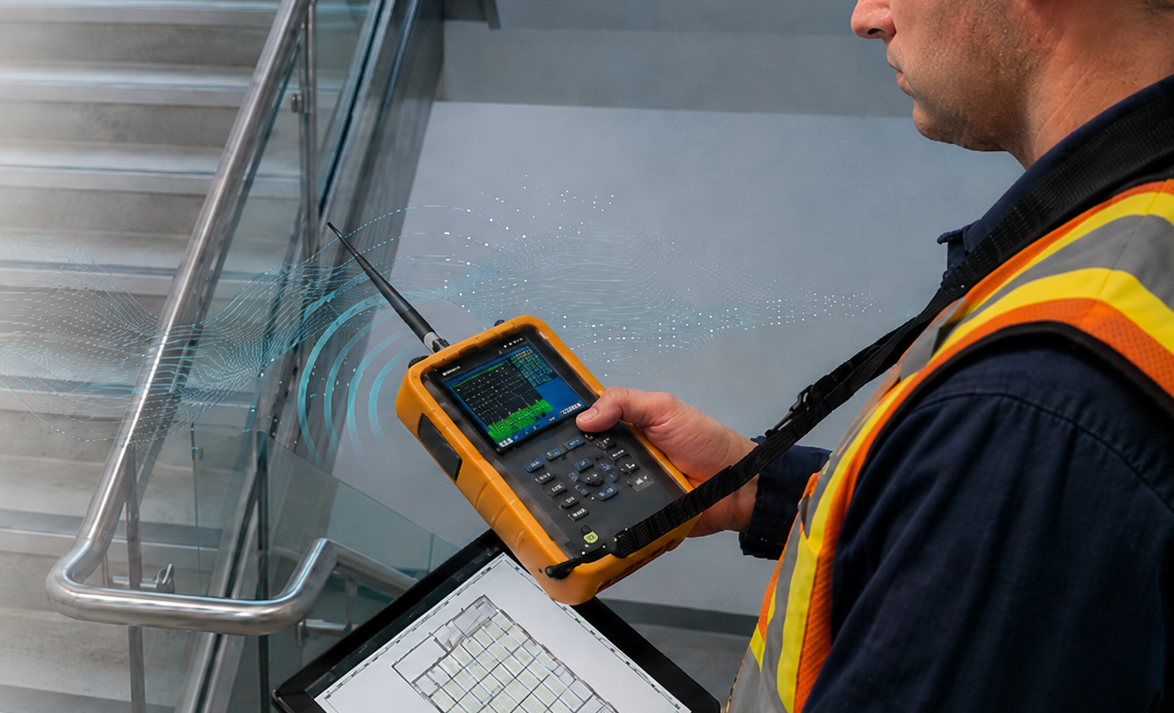
ERCES grid testing during public safety radio coverage evaluation. Image: MobileNet Services
ERCES Grid Testing Explained: What Fire Marshals Are Looking For
One of the most common questions we hear from building owners, architects, engineers, and contractors is:
“How do you determine whether a building actually needs an ERCES system?”
The answer usually starts with a grid test.
Most project teams do not think about public safety radio coverage until the fire marshal, code consultant, or electrical engineer brings it up. By that point, the project may already be deep into design or construction, and the team is trying to understand what ERCES means, whether it applies to their building, and how the requirement will affect budget and schedule.
The important thing to understand is that radio coverage outside the building does not guarantee radio coverage inside the building. A facility can be located near a public safety radio tower and still have weak or unreliable communication in stairwells, mechanical rooms, parking garages, elevator lobbies, or interior corridors.
That is why many jurisdictions require a formal radio coverage evaluation before determining whether an Emergency Responder Communication Enhancement System (ERCES) is required.
Table of Contents
1. What Is an ERCES Grid Test?
2. Why Buildings Fail Coverage Testing
3. What Are Fire Marshals Looking For?
4. What Happens During the Test?
5. Who Typically Requests an ERCES Grid Test?
6. When Should a Grid Test Be Performed?
Key Takeaway:
An ERCES grid test does not determine how large an ERCES system will be. It determines whether a system is needed at all.
What Is an ERCES Grid Test?
An ERCES grid test is a structured evaluation of public safety radio coverage inside a building. The purpose of the test is to measure whether emergency responders can communicate reliably throughout the facility using the local public safety radio system.
During the test, the building is divided into defined testing areas, often referred to as grids. Measurements are then collected throughout the building using specialized RF testing equipment configured to evaluate the applicable public safety radio frequencies.
The result is a data-driven view of how radio signals perform inside the structure. Instead of relying on assumptions, the project team and the Authority Having Jurisdiction (AHJ) can review actual measurements to determine whether the building meets the required coverage criteria.
If the building passes, an ERCES installation may not be required. If the building fails, the results help identify where coverage deficiencies exist and what areas may need to be addressed through an ERCES design.
Why Buildings Fail Coverage Testing
Many people assume that radio coverage problems are mainly tied to building size. While size can matter, it is usually not the only factor and often not the most important one.
We have seen smaller buildings fail coverage testing while larger buildings pass. The reason is simple: every building interacts with radio frequency signals differently.
Construction materials, floor layout, below-grade areas, wall density, roof structure, glazing, and distance from the serving public safety radio tower can all affect how signals enter and move through the building.
- Concrete and masonry construction
- Low-E glass and energy-efficient glazing
- Underground parking garages
- Stairwells and elevator shafts
- Metal roofing systems
- Structural steel
- Mechanical and electrical rooms
- Distance from the radio tower
This is why square footage alone is not a reliable way to determine whether a building will require ERCES. Two buildings with nearly identical footprints can produce dramatically different testing results.
What Are Fire Marshals Looking For?
The purpose of ERCES requirements is not simply to satisfy a code requirement. The purpose is to ensure firefighters, police officers, EMS personnel, and other emergency responders can communicate when they enter a building during an emergency.
When reviewing grid test results, fire marshals are typically evaluating whether radio communications remain reliable throughout the structure.
- Can responders communicate throughout the building?
- Are critical areas adequately covered?
- Are there dead zones?
- Does the building comply with adopted code requirements?
- Is the testing properly documented?
Particular attention is often given to stairwells, fire command centers, emergency generator rooms, fire pump rooms, elevator lobbies, basements, and parking garages.
Even if the majority of a building passes, significant deficiencies in critical areas may still require corrective action.
What Happens During the Test?
The testing process begins by identifying the applicable public safety radio system serving the jurisdiction. Different cities and counties often operate on different radio networks, frequencies, and coverage requirements.
Technicians then perform measurements throughout the facility using calibrated RF testing equipment. Measurements are collected within designated grid areas to create a complete coverage profile of the building.
After testing is complete, the collected data is analyzed and documented.
Typical deliverables include:
- Testing methodology
- Signal measurements
- Coverage maps
- Deficiency locations
- Building floor plans
- Summary findings
- Recommendations
This documentation provides the project team and AHJ with objective evidence of the building’s public safety radio performance.
Who Typically Requests an ERCES Grid Test?
One of the most common misconceptions about ERCES testing is that it is only requested by the fire marshal. In reality, coverage testing is often initiated by multiple stakeholders throughout the design and construction process.
Common parties that request ERCES grid testing include:
- Building owners and developers
- General contractors
- Architects
- Electrical engineers
- Fire protection consultants
- Code consultants
- Facility managers
- Fire marshals and AHJs
For new construction projects, testing is frequently performed to determine whether ERCES should be included in the project budget and design. For existing buildings, testing may be requested when additions, renovations, occupancy changes, or compliance concerns arise.
Many teams choose to perform testing during preconstruction because it provides objective information before significant investments are made in infrastructure.
When Should a Grid Test Be Performed?
One of the biggest mistakes project teams make is waiting until the end of construction to evaluate radio coverage.
If deficiencies are discovered late in the project, ERCES infrastructure may need to be installed after ceilings are closed and finishes are complete. This can create unexpected costs, schedule delays, and coordination challenges.
Performing coverage testing earlier allows the project team to identify issues before they become expensive problems. Pathways, equipment locations, power requirements, and survivability requirements can be incorporated into the overall building design rather than retrofitted later.
The earlier potential deficiencies are identified, the easier and less expensive they typically are to address.
Does Every Building Need an ERCES System?
No. Contrary to popular belief, not every building automatically requires an ERCES installation.
Some buildings provide adequate public safety radio coverage and pass testing without any enhancements. Others may have only isolated deficiencies that require limited improvements.
The purpose of the grid test is to eliminate assumptions and provide measurable data. Rather than guessing based on building size or occupancy type, project teams can make decisions based on actual radio performance.
This leads to more accurate budgeting, better planning, and fewer surprises later in the project.
The Bottom Line
An ERCES grid test is often the first step in determining whether a building can support reliable public safety radio communications.
The test provides objective data, helps satisfy AHJ requirements, and identifies potential coverage deficiencies before they become costly surprises.
Most importantly, it helps ensure emergency responders can communicate when every second matters.
For owners, architects, engineers, and contractors, evaluating radio coverage early can reduce risk, improve planning, and establish realistic expectations before construction progresses too far.
Need Help Budgeting ERCES For Your Project?
MobileNet Services provides turnkey ERCES DAS deployments including RF assessments, design, AHJ coordination, commissioning, and final inspection support for projects across healthcare, education, commercial, industrial, and mission critical environments.
Contact MobileNet Services to discuss your project.