
Preemption of First Net

FirstNet public safety network testing and pre-emption evaluation. Image: MobileNet Services
In July during a panel at the 2017 Public Safety Broadband Stakeholder Meeting AT&T and First Responder Network Authority (FirstNet) officials offered more details on pre-emption capabilities for the nationwide public-safety broadband network (NPSBN).
Salim Patel of the AT&T architecture and planning team for FirstNet confirmed that AT&T will provide quality of service (QoS), priority and pre-emption (QPP) for public-safety users. More interesting he reiterated that the solution will be multiband and provide public safety priority on all bands of the network, not just band 14.
QPP defines the essential quality of service and access policy for Public Safety Users and includes the following:
- Access class barring. Public-safety users will have a special access class and be exempt from throttling and barring.
- High-priority access. Public-safety users will receive priority treatment in various call setup stages.
- Traffic management. Non-public-safety traffic will be offloaded from band 14 to other bands during high loads.
- Admission control. Primary users will have a higher priority level and the ability to pre-empt other users.
“Primary Users will include firefighters, police officers and EMS and will be the only network users who can actually pre-empt another user on the network”, Patel said. A second tier of Primary Extended users was also defined who will have priority status on the network but not preemption rights.
OK, useful definitions but nothing much here about ruthless preemption. This all appears to reflect regular use of Band 14 where and when it exists and the use of AT&T existing spectrum where it does not. The rest defines a practical approach to managing priority access onto available spectrum anytime and gradually prioritizing load management on Band 14 in times of heavy use/emergency/zombie apocalypse. The only preemption implied here is on Band 14 and that’s pretty soft and far from ruthless, at least as described.
FirstNet Chief Technology Officer (CTO) Jeff Brachter also noted in opening comments that FirstNet expected the first band 14 access to be deployed in the March 2018 timeframe and would be extended as the program evolved. This indicates that AT&T will likely be leaning on their existing spectrum assets to provide service in many areas for some time to come.
Contrast this with availability of Mission Critical Push to Talk as discussed in a previous blog. It appears band 14 service and MCPTT will emerge in similar timeframes. It is anyone’s guess how soon States that opt in will start to restrict their budget for parallel existing emergency voice services and start using FirstNet for voice as well as data.
 In any event, it would seem that non dedicated AT&T spectrum will become the primary support for FirstNet data service in many areas, again raising the question of how to test and certify emergency service in a complex multi band environment. Also, if the network is only available in emergencies; does the operation of the prioritization mechanism itself require testing under emergency conditions? Current testing of Emergency Responder Radio Coverage Systems focuses on coverage not availability. i.e. Does coverage exist? Does the system work?
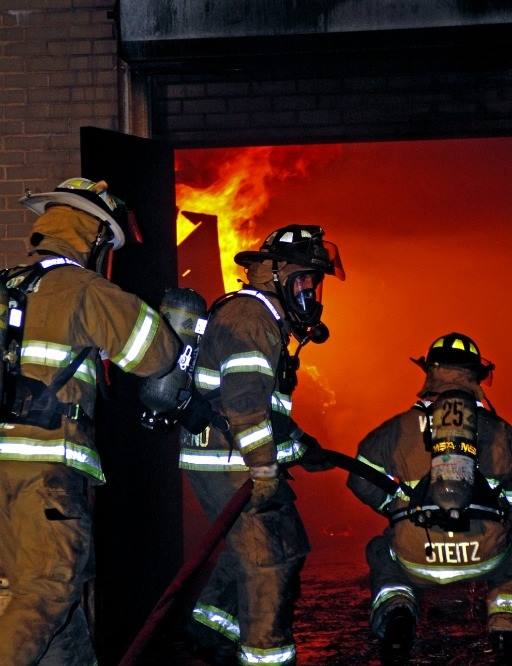 Availability in an emergency is assumed for a dedicated non changing network. How will emergency service be assured in a complex multiband environment where availability is a function of equally complex network based priority access rules.
This is particularly relevant for in building operation where rules already exist in many municipalities governing mandatory coverage requirements and performance limits for emergency services. As if we all needed reminding, supporting in building emergency was where this effort started and is the primary driver behind the establishment of FirstNet. Making sure it actually works in buildings in actual emergency conditions should be a high priority.